Last year's top ten tattoo search terms reveal something more interesting than trend data. They're a diagnostic. A collective pulse on what people are actually looking for as the industry shifts faster than most people working in it can keep up with.
When I started tattooing nearly twenty years ago, the landscape looked completely different. What's changed isn't just the aesthetic. It's the relationship people have with the whole process of getting marked. Most people following the current trends are doing so without understanding what's driving them. So here's my attempt to read beneath the surface.
1. “Tattoo shops near me” — 2.74 million searches/month
The most practical search intent there is. If you're a studio not showing up online, that's a straightforward problem with a straightforward solution.
But for people considering getting tattooed, there's a layer worth thinking about. Some of the most significant tattoo experiences I've had, and that people I've worked with have had, were shaped by the travel involved in getting there. Not convenience. Distance.
When you have to make an effort to reach your artist, something changes. The ordinary frame of your life gets interrupted. You arrive somewhere new, a little out of your element, and the tattoo gets to happen inside that expanded space. The journey there and the journey back become part of the container. You're not just getting ink. You're making a small pilgrimage.
If you connect with an artist who isn't local, don't dismiss it on the grounds of logistics. Sometimes the friction is the point. Over time, if tattooing becomes a meaningful practice for you, that travel element can become intentional. Part of how you mark transitions and chapters rather than just collecting images.
2. “Tattoo design ideas” — 823,000 searches/month
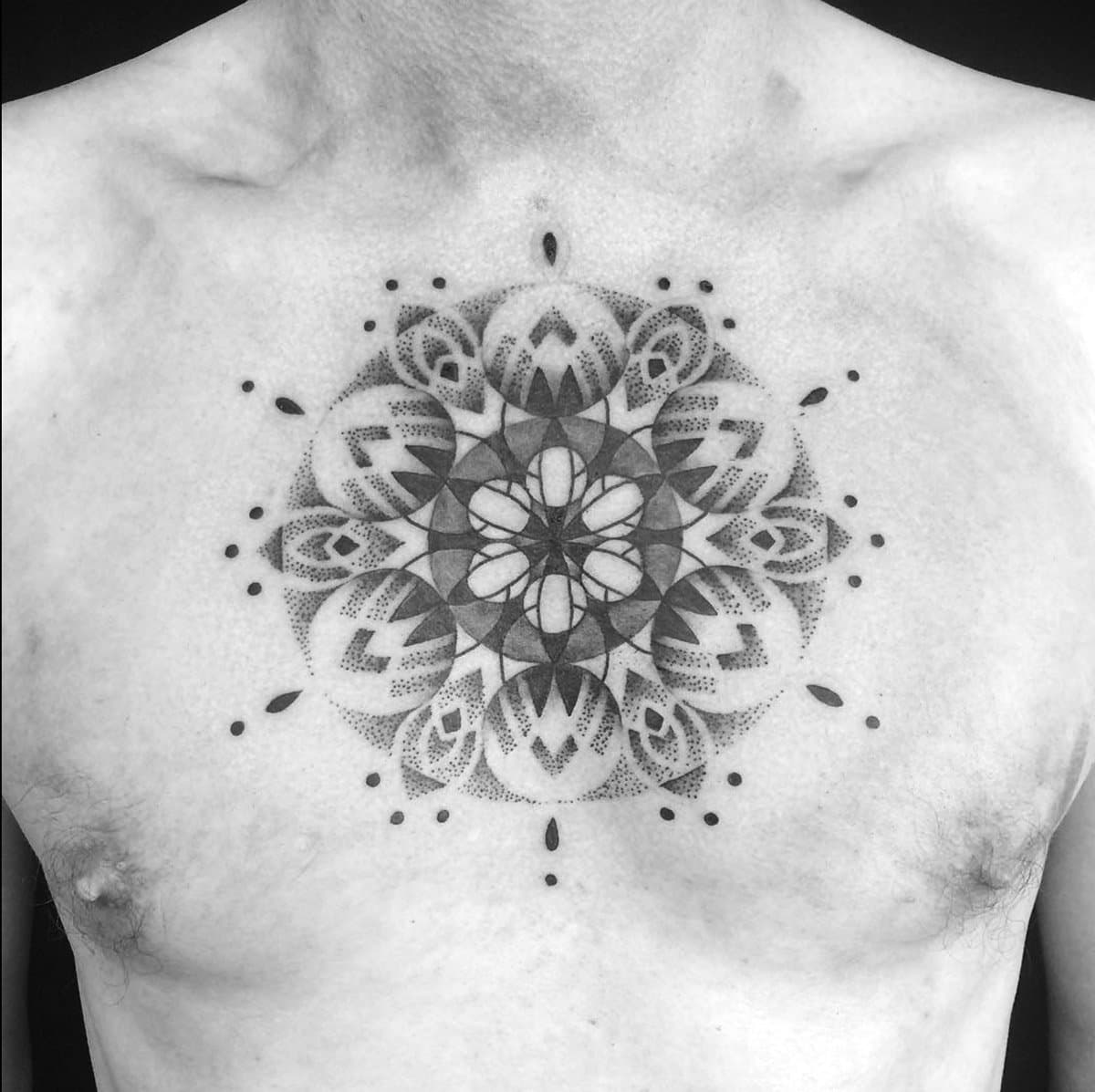
This is the broad sweep of someone looking for visual inspiration. Geometric tattoo ideas. Japanese tattoo ideas. Tribal references.
Most of what surfaces is generic. And even when it isn't, there's a deeper problem with this kind of searching that rarely gets named: it keeps the inspiration entirely external.
Think about it this way. A young tiger, before it has its stripes, goes to the elder who does the markings. It asks for spots because it's seen spots on other animals. Animals that don't even live in the same environment. It's not looking at the creatures around it. It's not asking what marking would actually make sense for a tiger. It's been influenced by images that have nothing to do with its own nature or its own world.
That's what happens when tattoo inspiration is sourced purely through screens. The reference has no root in who you are or what you're going through.
The internal direction tends to produce tattoos that last, not just physically but in meaning. The ones people never outgrow. A useful way to frame it: let the external reference answer the what (the aesthetic, the style, the image), and let your internal experience answer the why (why this image, why now, what it's responding to in your life). The hybrid of those two is where the most accurate tattoos come from.
3. “Tattoos for men” — 450,000 searches/month
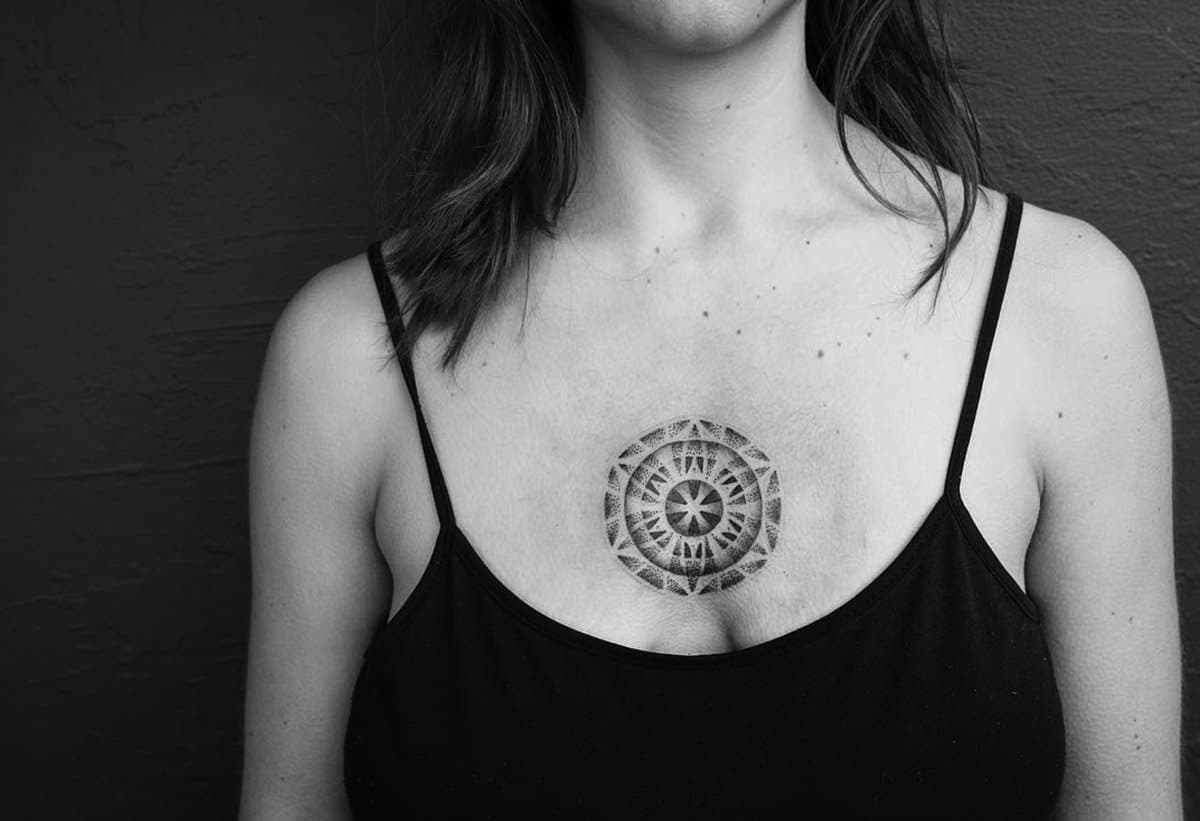
Men lead the gender-specific searches, with women searching similarly for small and feminine tattoo styles. While we're still in the design conversation, this is where I want to go a bit further into something that almost never gets discussed.
The subconscious communicates symbolically. When a particular image keeps showing up in dreams, in what you're drawn to, in what feels urgent, it may be a message about something you're going through. Not necessarily a blueprint for what to tattoo.
Two examples.
Someone experiences a major life change and keeps encountering blue butterflies. They dream of emerging from a cocoon. What's being communicated is transformation. That's the underlying language. But the butterfly, when it comes out of the cocoon, doesn't have butterflies on its wings. It carries its own markings. The person may not need a butterfly tattoo at all. They need something that represents their specific crossing.
Or someone wants a tiger to represent the strength and power they feel themselves stepping into. The tiger here represents them. They're the tiger coming into its nature. So what does that suggest? The tiger doesn't have tigers tattooed on it. It has stripes. Something inherent. The marking should reflect the essence of that becoming, not an image of the archetype itself.
This symbolic layer is worth sitting with before committing to a design. Sometimes what's drawing you toward a particular image is pointing through it to something more specific and personal.
4. “Does getting a tattoo hurt?” — ~300,000 searches/month
It comes up in every FAQ, every beginner's guide, every conversation between someone tattooed and someone considering it.
Yes, tattoos hurt. Anyone who tells you otherwise hasn't been in the chair long enough.
The more useful thing to say is that the real test isn't the initial pain. It's endurance. Most people can sprint. Not everyone can sustain a marathon. And if you're pursuing larger or ongoing work, that's what tattooing asks of you. Your body has a kind of battery, a combination of chemistry, mental state, sleep, food, the specifics of that particular day. All of it affects how a session goes.
If you're going through a long process, you'll have your easiest session and your hardest session. You'll find the spots that barely register and the spots that challenge everything. The hard days end, and so do the easy ones. The only real skill is learning to be present with wherever you are in it.
5. Small tattoos / micro tattoos — rapidly growing
The spike in this search reflects something broader: a desire for low commitment. Tiny, minimal, fine. Something that doesn't ask too much of you.
I understand the appeal. But it's worth being honest about what's often being avoided. If you're getting tattooed for less than thirty minutes in a low-pain spot, you're not really testing whether tattooing is something for you. You're sampling it at the lowest possible stakes. And when the image is so small it's barely visible, or done in white ink that fades out within a year, what's actually being said?
Tattooing has always been about commitment. The mark and the making of it. When you strip both of those down to almost nothing, you're left with something closer to an accessory than a marking. That might be exactly what someone wants, and that's fine. But if you're drawn to tattooing for deeper reasons, this entry point might not be the one that takes you where you want to go.
6. “Fine line tattoos” — 135,000/month and climbing
Fine line work, when it's done with real skill, can be genuinely beautiful. I'm not dismissing the craft. But the trend is young in ways that most people getting these tattoos don't fully reckon with.
In tattooing, things that don't stick around usually haven't stuck around for a reason. The fine line and minimal aesthetic hasn't existed long enough for anyone, even its best practitioners, to know what their work looks like in twenty years. We have that evidence for bolder, more saturated work. We don't have it here yet.
That's not a reason to avoid it. But it's a reason to go in with your eyes open about longevity, and to choose an artist with exceptional technical discipline rather than just following the trend.
7. “How much does a tattoo cost?” — 50,000 searches/month
There's a wide range. I charge $1,500 AUD for a full day of work and around $250 an hour for shorter sessions. At the other end of the spectrum, there are hobbyists working from home for next to nothing, and high-profile artists charging multiples of what I charge.
The guidance is simple: look at the work, know what tier you're aiming for, and go in without trying to negotiate someone down. Trying to get a better price by pressure puts a strange charge into the whole process. You can feel it in the room when it happens. And sometimes you can feel it in the tattoo afterward. Respect the relationship and you'll get more from it.
8. “Meaningful tattoos” — 60,000 searches/month
This is the territory Tattoo Pathway was built around. And the thing I keep coming back to is this:
If you want a meaningful tattoo, you need to be living a meaningful life.
The question most people ask is: what image can I get that's meaningful? But the more useful question is: what am I doing with my life that makes any tattoo meaningful? What's happening in the space between your tattoos, in how you're growing, what you're working through, what you're becoming, that would give a marking something real to respond to?
The meaning doesn't live in the image. It lives in the life that earns the image. When you bring that kind of internal foundation to the process, the tattoo becomes a record of something real rather than a placeholder for meaning you're hoping to find later.
9. “First tattoo ideas” — established search staple
First tattoo guides. Where to start. What's appropriate for a beginner. These searches are everywhere, and they tie back to all the other ones: the location questions, the pain questions, the size questions.
Here's what I'd say: no amount of research fully prepares you for what getting tattooed is actually like. You have to step into it. So your real task is finding someone whose work and process you trust, having a real reason for doing it, and then committing.
The question that tends to open something up for people at this stage is: what's your last tattoo going to be? Not what's your first one. Start there, and see what it changes in how you're thinking about it. You're probably not getting just one. Most people who approach tattooing with any intentionality end up in a longer process. Beginning with some sense of that trajectory, even loosely, tends to produce better decisions from the start.
10. “Custom tattoo design” / AI-generated concepts — a new and growing search
This is genuinely new. It didn't exist in this form a few years ago. People are now prompting AI image generators and bringing the outputs in as references, describing a rising phoenix for resilience, or a combination of symbols that represent something specific to them. Artists across the industry are reporting this regularly now.
What it points to is a real hunger for guidance that the industry isn't fully providing. People are trying to find, through technology, a process of externalising something internal. AI image tools are the closest thing many people have found to a collaborator in that search.
The tattoos that hold up over decades, the ones people can't imagine their life without, tend to be emergent. They come out of a genuine relationship between the person, their experience, and the artist they're working with. The inspiration isn't outsourced. It's drawn out.
I'm not suggesting people stop using AI tools as reference or starting points. But the attachment to the output is where it can go wrong. Treat it as one input among many. Ask yourself: what else in my life is pointing toward this? What am I actually going through that this image might be responding to? Bring that to the conversation with your artist, and let something more specific and more yours emerge from it.
The most interesting thing about that search is the framing: help me design a custom tattoo. People are asking for help. That's the real signal. The search for meaning in tattooing and the search for meaning more broadly aren't that different. What you need is a process that takes you seriously, not just a generator that gives you an image.
That's what we're trying to build at Tattoo Pathway. A process worthy of the decision.